
Screeding & Subfloor Preparation Done Right
The part of the floor you never see is the part that decides whether everything above it succeeds.
Self-levelling screeds • Moisture suppression • Grinding & repairs
Make an EnquiryEvery flawless floor starts below the surface.
Ninety per cent of floor failures start in the subfloor: moisture, contamination, poor levels or weak substrates. Fix those first and almost any finish will perform; skip them and no finish will.
Flowfloor treat preparation as a discipline in its own right. We moisture-test to BS 8203, grind off contamination, repair cracks and joints, and install levelling screeds flat enough that your chosen finish, LVT, resin, timber or carpet, goes down without compromise.
Because we install the finishes too, our preparation spec is always driven by what is going on top, and both stages carry one warranty.
Moisture managed
Hygrometer testing and DPM systems that stop failures before they start.
Flat where it matters
Levelling compounds installed to SR1 surface regularity for demanding finishes.
One warranty, top to bottom
Preparation and finish from one contractor means no blame games.
Preparation services
Whether we are preparing for our own installation teams or yours, the substrate leaves ready and documented.
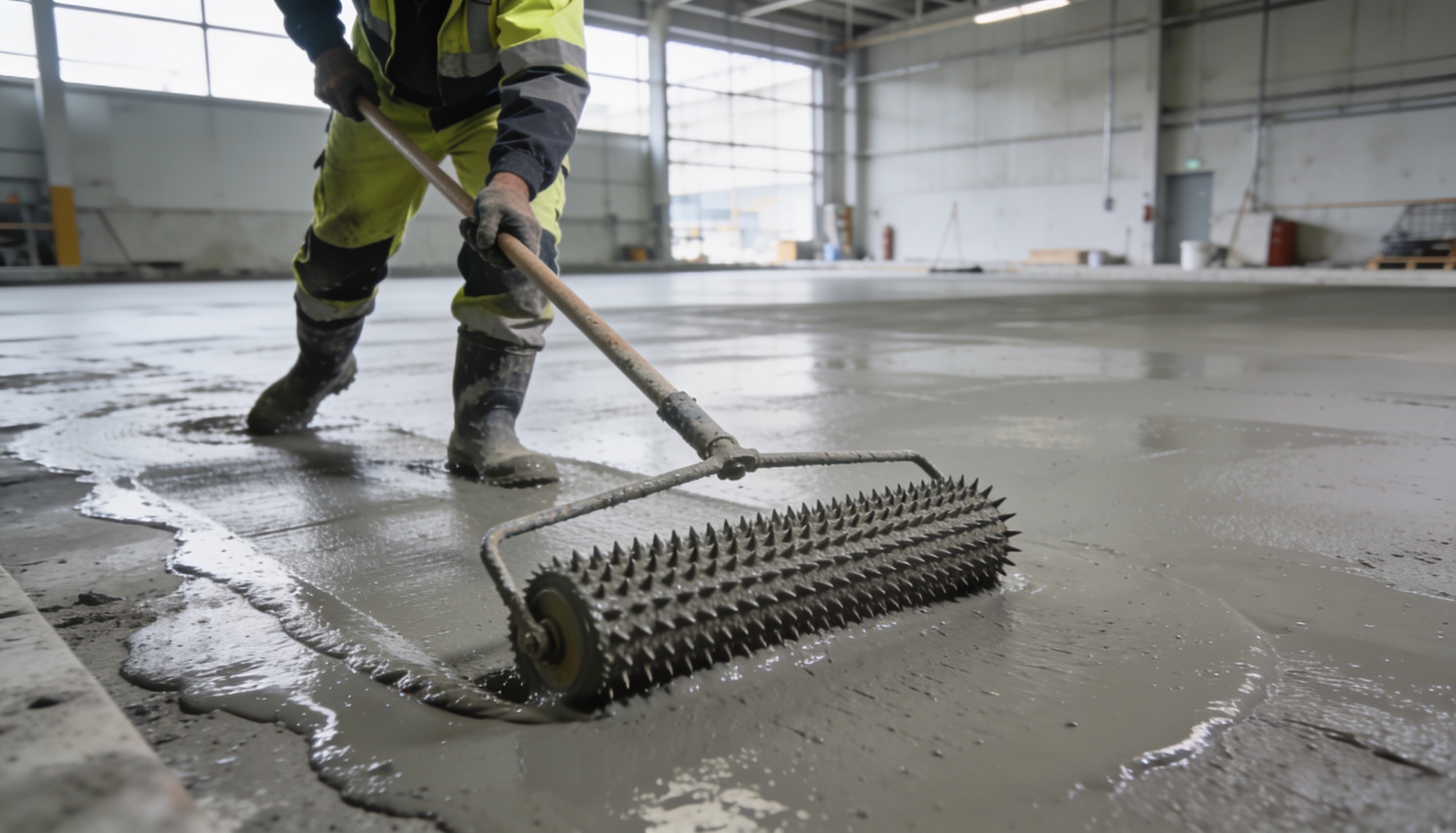
Self-levelling screeds
Fast-track and traditional compounds from feather-edge to 50mm+.
Surface DPMs & moisture suppression
Epoxy systems for slabs that cannot wait to dry.
Diamond grinding & shot blasting
Remove adhesives, coatings and laitance for a sound key.
Crack & joint repair
Resin injection and stitching that stops movement telegraphing through.
Floor preparation services for every finish
Almost every flooring failure we're asked to rescue — lifting vinyl, cracked tiles, debonded resin — traces back to the subfloor, not the finish. Proper floor preparation is invisible in the finished job, which is exactly why it gets skipped. Flowfloor treat it as a service in its own right, whether we're laying the final floor or handing over to another trade.
Our subfloor preparation services
- Moisture testing and damp-proof membranes. Hygrometer and carbide testing to BS 8203, with surface DPMs applied where readings are too high to proceed.
- Grinding and shot blasting. Mechanical removal of adhesive residues, laitance, coatings and contamination back to a sound, keyed base.
- Latex and smoothing compounds. Self-smoothing underlayments from a feather-edge skim to 15mm+ deep-fill, pumped on larger areas.
- Repairs and crack isolation. Resin injection, joint repairs and isolation membranes so old movement doesn't telegraph into the new floor.
- Plywood and overboarding. Timber bases stabilised and overboarded ready for vinyl, LVT and carpet.
Floor screeding: liquid and traditional
We install both flow (liquid anhydrite/cement) screeds and traditional sand:cement screeds. Flow screeds pump fast, self-level and wrap underfloor heating pipes without voids — ideal for large areas and heated floors. Sand:cement remains the right call for falls to drainage, wet rooms and patch repairs. We'll specify by the job, including drying times and moisture targets for your chosen finish, so the programme is honest from day one.
For main contractors
Programme-critical preparation across multiple plots or phases, with moisture records and datasheets for the O&M file.
For flooring contractors
Grinding, DPMs and smoothing as a standalone package — we prep, you fit. No competing for the finish.
For homeowners & self-builds
Screed and preparation for extensions and renovations, coordinated with your builder and your chosen floor.
Why preparation decides whether your floor lasts
Every flooring manufacturer's warranty starts with the same conditions: the subfloor must be sound, smooth, and dry to a stated moisture level. Miss any of the three and the warranty is gone before the floor goes down.
Sound means no loose screed, adhesive residue or laitance — anything the new floor bonds to must itself be bonded. Smooth matters most under vinyl and LVT, where a 2mm ridge reads through the finished floor within weeks. Dry is the one that catches projects out: a 75mm screed can need weeks to reach 75% RH naturally, and pushing a floor down early traps moisture that emulsifies the adhesive.
We test and document all three before anything is laid — and where the programme can't wait for a screed to dry, we'll specify a surface DPM honestly rather than gamble with your finish. It's why the floors we prepare stay down, whether the final surface is polished concrete, resin, safety vinyl or timber.
Send us your programme and we'll tell you what the base needs — and what it doesn't.
Screeding FAQs
Common questions about screeding and subfloor prep.
How flat does a subfloor need to be?
For LVT and resin, SR1 (max 3mm deviation under a 2m straightedge) is the usual target. We measure and document it before any finish goes down.
How long does screed take to dry?
Traditional screeds dry at roughly 1mm per day; fast-track compounds can take foot traffic in hours and finishes in 24 to 48 hours. We’ll programme to your deadline.
What is a surface DPM and do I need one?
A liquid epoxy membrane that seals residual moisture in the slab. If hygrometer readings are above the finish manufacturer limit, it is the difference between a warranty and a failure.
Can you prepare floors for another contractor finish?
Yes, we regularly hand over tested, documented substrates for other trades to build on.
How long does a screed take to dry before flooring can go down?
The rule of thumb is 1mm a day up to 40mm and slower beyond that, so a 75mm sand:cement screed can need well over two months in average conditions. Liquid screeds and force-drying can shorten this, and a surface DPM can remove the wait entirely — we test with hygrometers rather than guess, and give you the honest options.
What is the difference between liquid screed and sand and cement screed?
Liquid (flow) screed is pumped and self-levels — fast to install over large areas, excellent around underfloor heating, and flatter than a hand-finished screed. Sand:cement is trowelled by hand — slower, but it can be laid to falls, works in wet rooms, and suits patch repairs. Many projects use both in different areas; we install and advise on each.
Do I need my floor ground or shot blasted before a new finish?
If there's old adhesive, paint, sealer or a weak surface layer (laitance), yes — new floors only bond as well as what they're stuck to. Grinding or blasting takes the base back to clean, keyed concrete. It's quick, dust-extracted, and far cheaper than a debonded floor.
Can you level a floor that has different heights or old bumps?
Yes — that's what smoothing and deep-fill compounds are for. We can feather from zero to 15mm or more in one application, transition between rooms laid at different times, and ramp thresholds to meet accessibility requirements.
Do you do subfloor preparation as a standalone job?
Yes. Main contractors and flooring firms use us purely for preparation — testing, grinding, DPMs, smoothing and screeding — with the finish fitted by others. You get the moisture records and datasheets for your file either way.
Ready for flawless floors?
Tell us a bit about your project and we’ll come back with straightforward advice, options and a clear quotation – whether it’s for a home, workspace or large commercial site.