
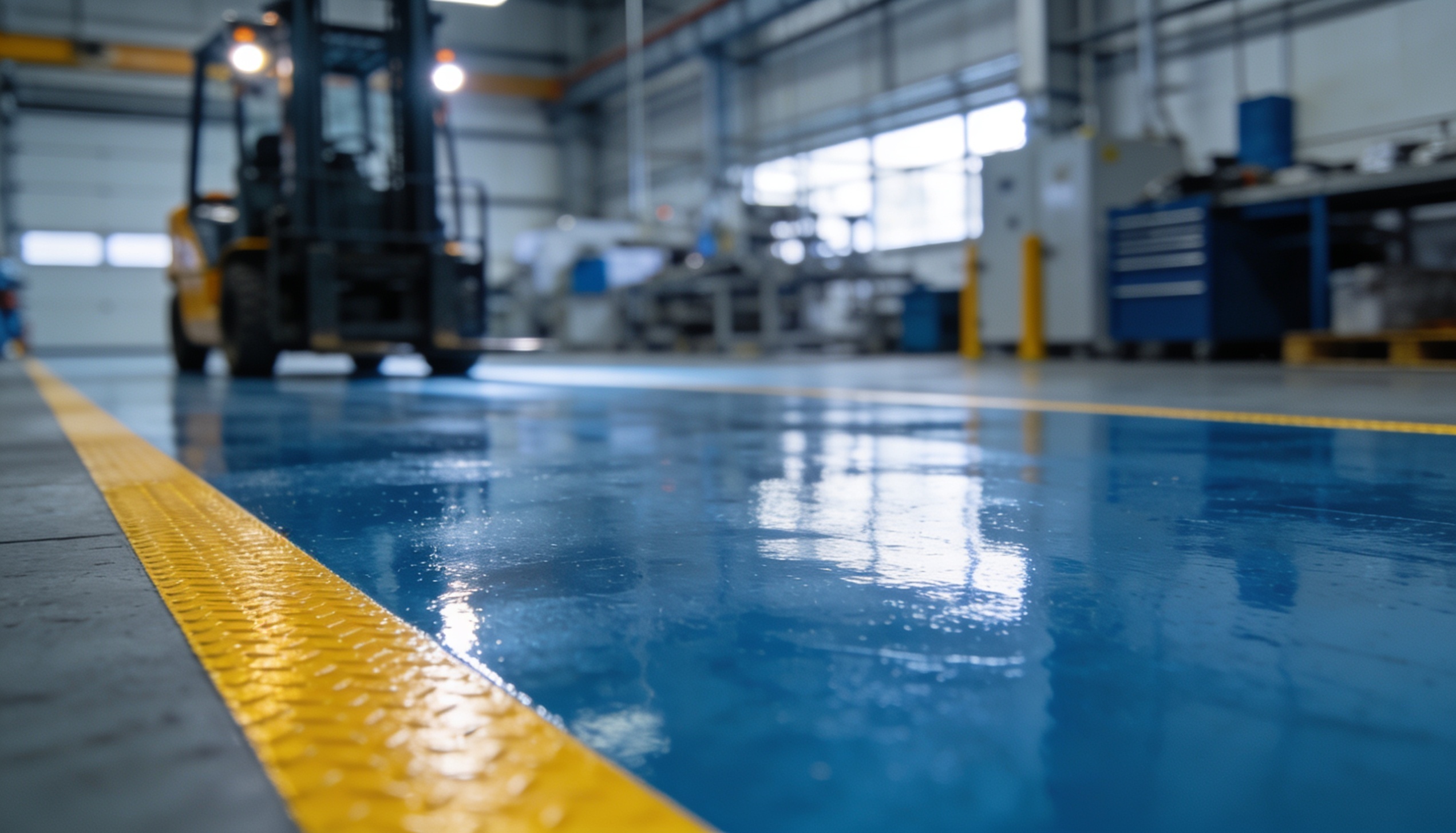
Resin Flooring for Workshops, Retail & Food Spaces
From arenas and warehouses to offices and family homes, Flowfloor design, supply and install every type of floor, delivered on time, finished perfectly.
UK nationwide installation • Seamless, easy-clean finishes • Systems built for heavy use
Make an EnquirySeamless resin floors that work as hard as your business.
If your floor needs to cope with forklifts, footfall, spillages, cleaning regimes and long operating hours, resin is one of the most dependable options available. Installed as a continuous surface, it eliminates the weak points where dirt and moisture collect, making it a practical choice for hygiene-led and high-traffic environments.
At Flowfloor, we specify resin systems around how your space is actually used, expected traffic, slip risk, chemical exposure, cleaning routines and downtime requirements.
The result is a floor that performs day-to-day, looks professional for longer and is easier to maintain.
Hard-wearing performance
Systems built for heavy footfall, trolleys, pallet trucks and everyday impact.
Hygienic & easy-clean
Seamless finishes help reduce dirt traps and speed up cleaning in busy spaces.
Specified for your site
Options matched to how you work: traffic, slip risk, chemical exposure and downtime.
Resin Floors built for busy environments
From workshops and warehouses to customer-facing retail and food spaces, our resin flooring is designed to stay looking professional under pressure, with options for slip resistance, chemical protection and high-traffic durability.
Epoxy resin flooring
Hard-wearing, great for workshops and warehouses.
Polyurethane resin flooring
Flexible, ideal where temperature changes matter.
High-build coatings & self-levelling systems
For smart, seamless finishes.
Flake systems & anti-slip finishes
Extra grip plus improved look.
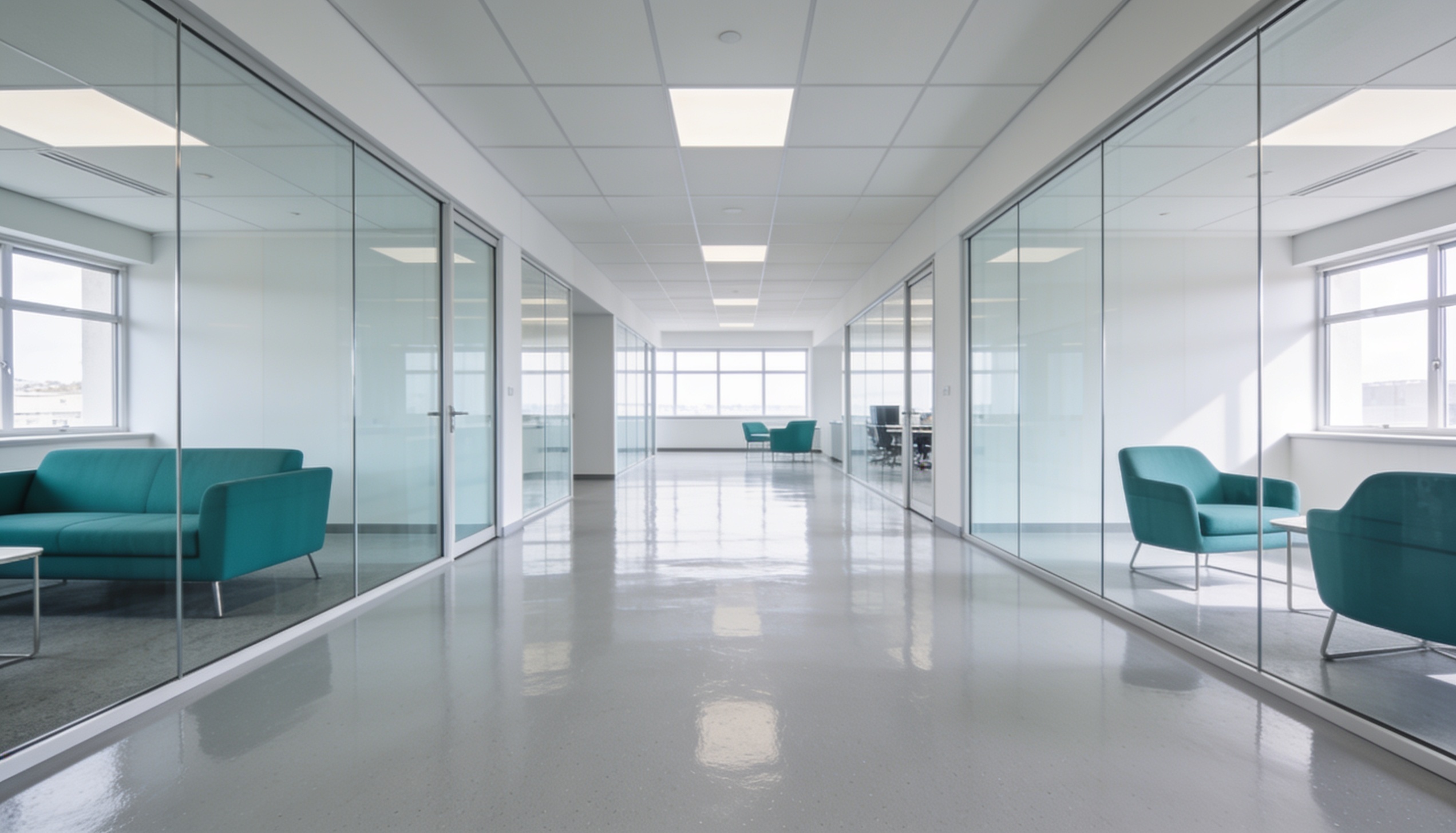
Epoxy, polyurethane or flow-applied? An honest guide
“Resin flooring” covers several very different systems, and the right one depends on what the floor has to survive. Flowfloor install all of them, so the recommendation follows your use case rather than our stock.
Epoxy resin floors
The workhorse. Epoxy coatings (0.3–1mm) and self-smoothing epoxies (2–3mm) give a hard, chemical-resistant, seamless surface for workshops, garages, plant rooms and showrooms. High-build systems take forklift traffic; decorative flake and quartz finishes make them front-of-house presentable.
Polyurethane (PU) systems
PU screeds (4–9mm) are the heavy-duty end — the standard for food and drink production because they tolerate thermal shock from hot washdowns, resist lactic and organic acids, and can be laid to falls. Comfort-grade PUs also give a slightly flexible, quieter floor for retail and studios.
Flow-applied resin flooring
Self-smoothing, flow-applied systems — epoxy or PU — are poured and spread to a dead-flat, glass-smooth seamless finish. They're the answer where hygiene, appearance and cleanability all matter at once: commercial kitchens, labs, healthcare, and increasingly polished-look domestic interiors.
Anti-slip and specialist finishes
Every system can be dressed with quartz or aluminium oxide to hit a specified slip rating, and we install ESD, chemical-bund and rapid-cure MMA variants where the environment demands them — MMA cures in hours, which is how supermarkets get a new floor overnight.
Where seamless resin makes sense
The environments where resin outperforms every alternative.
Food & drink production
PU screeds that shrug off hot washdowns, fats and acids — welded-seam hygiene with no seams at all.
Workshops & garages
Oil-proof, dust-free epoxy that cleans with a mop and takes trolley jacks in its stride.
Warehouses & industry
Line-marked, forklift-rated systems installed in phases around your operation.
Retail, studios & homes
Flow-applied comfort finishes — one seamless colour field from wall to wall.
What decides the cost of a resin floor?
- System build-up. A thin-coat epoxy and a 9mm PU screed are different jobs entirely — thickness is the biggest cost driver.
- Substrate condition. Resin is only as good as the concrete under it; grinding, repairs and damp-proofing come first. That's our own trade — see subfloor preparation.
- Downtime constraints. Night and weekend installation, or rapid-cure MMA chemistry, compress the programme at a premium worth paying when every closed hour costs money.
- Details. Coving, drainage falls, line marking and slip-rated zones all add labour — and all get priced openly, not discovered on the invoice.
How we install a resin floor
- Survey. Use case, chemistry, temperatures, traffic and slip requirements — plus moisture and adhesion testing of the slab.
- Preparation. Diamond grinding or shot blasting, repairs, and DPM where the slab needs it.
- Installation. Primer, body coats and topcoat to the specified build-up, with coving and details formed as we go.
- Cure and handover. Clear cure times before traffic, plus a maintenance sheet matched to the finish.
Not sure whether the job needs resin or polished concrete? We install both — describe the space and we'll give you the case for each, with numbers.
Resin Flooring FAQs
Quick answers to the most common questions we get about resin floors.
Need advice on your site? We’ll happily help.
How long does resin flooring last?
With the right specification and maintenance, commercial resin floors typically last 10 to 20 years. Traffic levels, chemical exposure and cleaning regime all play a part. We’ll tell you upfront what yours will need.
How quickly can a resin floor be installed?
Most systems go down over a weekend or a short shutdown, depending on size and spec. Some fast-curing products allow a return to traffic in 24 hours. We programme around your operation to minimise downtime.
How much does resin flooring cost per m2?
Budget systems such as high-build epoxy coatings start from around £20 to £40 per m2, while heavy-duty and decorative systems run higher. Every quote we issue is itemised, so you can see exactly where the money goes.
Can resin be installed over an existing floor?
Often, yes. We assess the existing substrate for adhesion, moisture and levels first. Where preparation is needed, diamond grinding, repairs or a levelling screed, we handle it as part of the same programme.
What is the difference between epoxy and polyurethane resin flooring?
Epoxy is harder and more rigid — excellent for mechanical wear and most chemicals, and usually the more economical system. Polyurethane is tougher against thermal shock and organic acids, which is why food production floors are almost always PU. For most workshops epoxy wins; for anywhere with hot washdowns, PU does.
How thick does a resin floor need to be?
Coatings run 0.3–1mm for light traffic, self-smoothing systems 2–4mm for general industrial and commercial use, and PU screeds 4–9mm for heavy-duty and food environments. Thicker isn't automatically better — it's matched to impact, traffic and temperature.
How long before we can use the floor after installation?
Standard epoxies and PUs take light foot traffic in 12–24 hours and full service in 3–7 days depending on system and temperature. Where that's too slow, MMA rapid-cure systems reach full service in a couple of hours — that's how we hand back trading floors overnight.
Can resin flooring be laid over old tiles or painted concrete?
Over sound, well-keyed tiles, sometimes — after grinding and a bridging primer. Over old paint, almost never without removal, because the resin can only bond as well as the paint underneath it. Our survey includes adhesion testing, so you get a straight answer before any money changes hands.
Is resin flooring slippery when wet?
A smooth-finished resin floor can be, which is why wet or greasy areas get quartz or aluminium-oxide dressing broadcast into the topcoat to hit a specified R-rating. We match the profile to your slip-risk assessment — grippy enough to be safe, smooth enough to clean.
Ready for flawless floors?
Tell us a bit about your project and we’ll come back with straightforward advice, options and a clear quotation – whether it’s for a home, workspace or large commercial site.